



-
 New Combo
Combo Pack 3
Shop ComboCombo Pack 3 – Protein Atta, Black Wheat, Multigrain Atta
₹1399 ₹1648 -
 New Launch
Sunrise Millet Chocolate Flavour
Shop NowSunrise Millet Chocolate Flavour
From ₹255.00 -

Daily fiber + Metabolic Combo Packs
Shop NowDaily fiber + Metabolic Combo Packs
₹ 1,999.00 -

Combo Packs 3, Protein Atta, Multigrain, Black Wheat Flour
Shop NowCombo Packs 3, Protein Atta, Multigrain, Black Wheat Flour
₹ 1,399.00 -
Black Wheat Flour for Balanced Sugar Levels and Better Digestion
MRP:Regular price ₹ 599.00Regular priceUnit price per -
Khapli Wheat Flour
MRP:Regular price ₹ 599.00Regular priceUnit price per -
Ragi Flour
MRP:Regular price ₹ 450.00Regular priceUnit price per -
Black Wheat Atta And Ragi Atta
MRP:Regular price ₹ 470.00Regular priceUnit price per -
Black Wheat Atta And Khapli Atta
MRP:Regular price ₹ 480.00Regular priceUnit price per





Ancient Grain Flour Online in India: Khapli, Black Wheat and Ragi Atta
Ancient grain flour is atta milled from grains that have been grown in India for centuries and have changed little over time, such as khapli (emmer) wheat, black wheat and ragi (finger millet). Gourmet Staples stone-grinds these grains in small batches with no preservatives, so you can bring traditional flavour and more variety into everyday rotis, parathas and bakes without changing how you cook.
Our Ancient Grain Flours
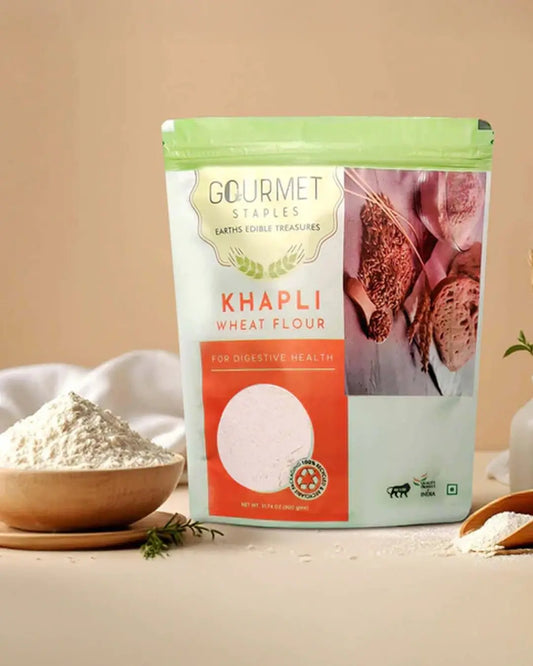
- Khapli Wheat Flour (Emmer Wheat Atta) – an ancient variety of wheat with a slightly nutty taste and more fibre than modern refined atta. Use it 1:1 in place of regular atta for rotis and parathas. Khapli is still wheat, so it contains gluten.
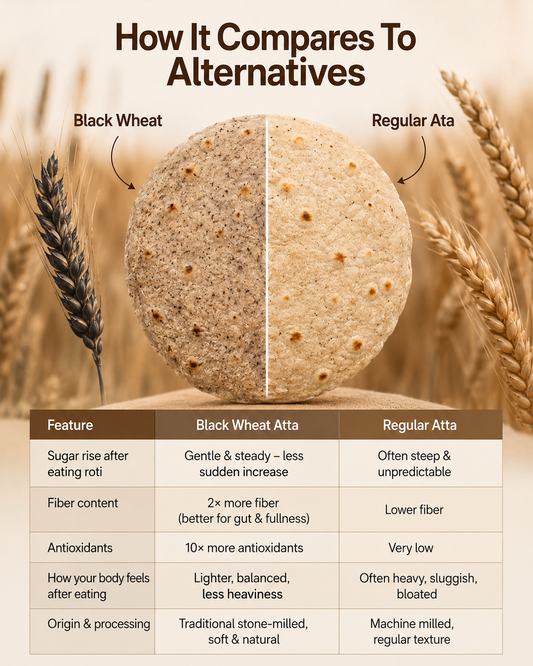
- Black Wheat Flour – 100% whole black wheat, a single-ingredient flour with dark-pigmented bran that carries natural anthocyanins. Around 12–13g protein and 10–12g dietary fibre per 100g (approximate). Rotis are naturally grey-brown and taste earthier than regular atta.
- Ragi Flour (Finger Millet Atta) – a naturally gluten-free millet flour, known for its calcium, fibre and iron. Ideal for ragi roti, dosa, porridge, pancakes and baking blends.
- Value combos – Black Wheat Atta and Khapli Atta and Black Wheat Atta and Ragi Atta let you try two ancient grains together.
Ancient Grain Flour Compared
| Flour | Gluten | Taste and colour | Best for |
|---|---|---|---|
| Khapli (emmer) wheat | Contains gluten | Mild, nutty, light brown | Everyday rotis, parathas, puris |
| Black wheat | Contains gluten | Earthy, nutty, grey-brown | Rotis, parathas, bread (up to 50–70% of the flour) |
| Ragi (finger millet) | Naturally gluten-free | Earthy, reddish-brown | Ragi roti, dosa, porridge, pancakes, cakes |
How to Choose the Right Ancient Grain Atta
- Want rotis that taste closest to regular atta? Start with khapli wheat flour.
- Want more fibre and a bolder flavour? Try black wheat flour, starting with a 50:50 blend with your usual atta.
- Need a gluten-free option? Choose ragi flour, or see our gluten free atta collection.
- Looking for a multigrain blend for sugar-conscious meals? See D-Smart 7-grain multigrain atta and our low GI atta collection.
Tips for Soft Ancient Grain Rotis
Knead with slightly warm water and rest the dough for 15–20 minutes. Black wheat and ragi doughs usually need a little more water than regular atta. For ragi rotis, use hot water and knead while warm so the dough holds together. Store all flours in an airtight container in a cool, dry place; refrigerate in humid weather.
Learn More
Read our guides to khapli wheat flour benefits, cooking with black wheat flour and ragi atta benefits, or try our black wheat flour bread recipe.
Frequently Asked Questions about Ancient Grain Flour
What is ancient grain flour?
It is flour made from grains that have been cultivated for centuries with little change, such as khapli (emmer) wheat, black wheat and millets like ragi. Most are used as whole grain atta, so they keep their bran and natural fibre.
Is khapli atta the same as emmer wheat flour?
Yes. Khapli is the Indian name for emmer wheat, an ancient wheat variety. Khapli atta is simply stone-ground whole emmer wheat flour.
Is ancient grain flour gluten free?
Not all of it. Khapli and black wheat are types of wheat and contain gluten. Ragi is naturally gluten-free.
How do I start using ancient grain flour?
Mix it with your regular atta, for example one part khapli or black wheat to one to three parts wheat atta, then increase the share as your family gets used to the taste and texture.
Do ancient grain rotis stay soft?
Yes, if you knead with warm water, rest the dough and cook on a hot tawa. Expect rotis to be slightly denser and darker than maida-based rotis, which is normal for whole grain flour.
Are these flours stone-ground?
Yes. We stone-grind our flours in small batches with no added preservatives. Use within the shelf life printed on the pack.